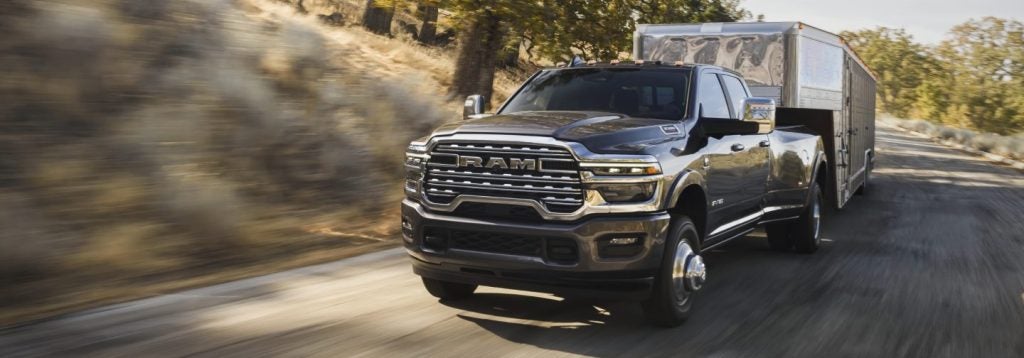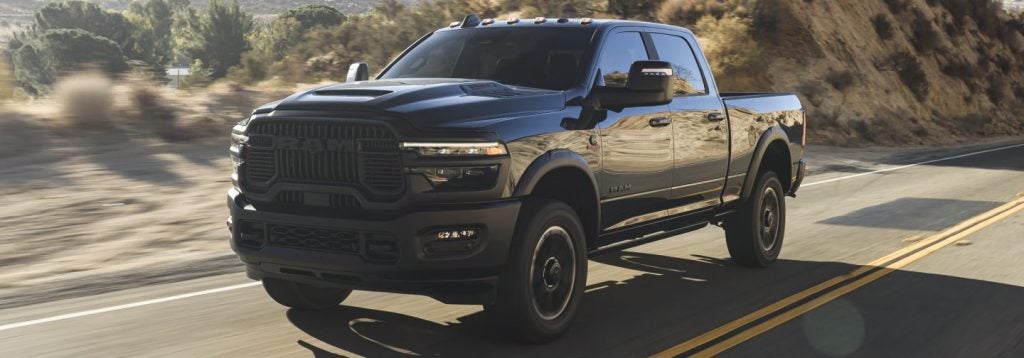





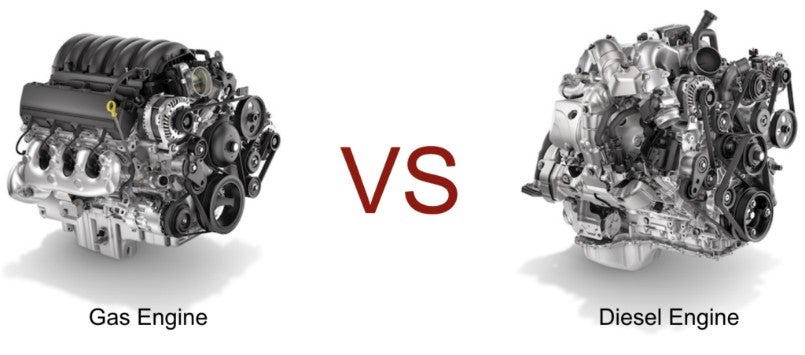
In deciding whether to buy a diesel or gas engine Ram truck, shoppers generally weigh performance, cost, efficiency, and long-term use. Each has its positives and negatives, and the decision is ultimately a matter of how the truck will be used and what matters most. Either powertrain in a Ram truck will do the trick, but the distinction between diesel and gas engines often makes one more appropriate to the situation. Category Diesel Ram Truck Gas Ram Truck Purchase Price Higher upfront cost Lower upfront cost Power High torque at low RPM, ideal for towing Higher horsepower, quicker acceleration Towing/Hauling Best for heavy loads and frequent towing Good for light to moderate towing Fuel Economy Better efficiency on long highway drives Lower efficiency but cheaper fuel per gallon Daily Driving Feels slower off the line, stronger under load Responsive, lighter driving feel Maintenance More expensive repairs, requires DEF Cheaper and easier to service Durability Built for long life, can exceed very high miles Long-lasting, but not quite as robust as diesel Fuel Availability Diesel fuel slightly less common in some areas Gasoline widely available everywhere Noise & Vibration Louder and more noticeable engine sound Smoother and quieter overall Resale Value Higher resale due to demand and durability Lower resale but smaller upfront investment Best For Heavy towing, long hauls, high mileage users Everyday driving, lighter work, short trips Power and Performance The most basic contrast between diesel and gas Ram trucks would be power delivery. Diesel engines are renowned for their massive torque output, which is specifically very beneficial for hauling and towing. A diesel Ram has robust pulling power at low RPMs, and heavy trailers become simple to haul with less stress on the engine. For those who trailer boats, campers, or equipment regularly, the diesel option provides for smoother and more aggressive performance. Gas engines, by contrast, like to deliver more horsepower than diesel. This results in gas-powered Rams being faster in acceleration and more responsive for normal driving. If the individual uses their truck mostly as a daily driver, commutes, or likes quicker throttle response, the gas engine will be more lively and exciting on the road. Fuel Economy and Efficiency Diesel engines tend to be more fuel-efficient, especially on the highway. They burn fuel at a reduced rate and can achieve higher miles per gallon than gas engines of comparable size. For commuters who cover a lot of miles—especially highway miles—a diesel Ram can save money in fuel expenses in the long term. Gas engines do hold the edge for drivers who drive shorter. Diesel fuel economy excels on long road trips, but in city traffic or stop-and-go conditions, the difference between diesel and gas fuel economy can close. Gasoline is generally cheaper at the pump, which equates to while a gas engine may be more expensive overall, per fill-up, it is usually cheaper. Cost and Maintenance The starting price of a diesel Ram is typically more than that of a gas-powered one. Diesel engines are more expensive to make and put in place, and that's what's charged to the truck. Buyers must consider whether the long-term savings and towing benefits make the higher initial expense worth it. Maintenance is yet another consideration. Diesel engines will last longer and are designed to withstand the rigors of heavy use, making them more desirable in heavy-duty trucks. That said, when they do require repair, they can be more costly due to the nature of the engine and the price of diesel-only components. Routine maintenance in the form of fuel filter changes and diesel exhaust fluid refills also contributes to the cost of ownership. Gas engines are generally less costly to fix and maintain. Parts are easily found, and technicians are more used to gas engines, so the job is quicker and more affordable. They may not make it quite as far as a properly maintained diesel, but many gas Rams will still give hundreds of thousands of miles of hassle-free service to most motorists. Longevity and Resale Value A diesel Ram truck typically holds a higher resale value. The popularity of diesel engines because of their long-standing reputation for durability and towing capacity makes it a sought-after vehicle in the used market. Individuals who plan to keep their truck for years and drive it extensively may find more value in owning diesel. Gas Rams, although typically depreciate faster, still have strong demand, especially in half-ton trucks. Because the up-front cost is lower, depreciation doesn't seem as extreme, and for those buyers who plan to upgrade after a few years, the gas engine could be more cost-effective. Driving Experience The driving experience with gas and diesel also vary. The diesel engines are quieter than previously but still have a distinctive noise. They are more sedate in their acceleration, with their power felt in towing circumstances rather than stoplight acceleration. Diesel engines provide a more responsive, antiquated driving feel for most drivers. They provide quicker acceleration and help make the truck lighter on its feet, which can be a tremendous advantage for frequent use in suburb or city environments. Who Should Choose Diesel? A Ram truck equipped with diesel is ideal for clients who: Tow or haul heavy loads on a regular basis. Travel long miles, particularly on the highway. Require maximum fuel efficiency for extended hauling. Plan to keep the truck for a long period and value longevity. Appreciate greater resale value in the future. Who Should Choose Gas? A gas-powered Ram truck is better for those drivers who: Will be using their truck primarily for commuting or light-duty work. Drive shorter distances or mostly in the city. Enjoy a lower initial purchase price and lower maintenance. Want a more responsive and faster driving experience. Do not demand maximum towing capacity. Final Thoughts The choice between a diesel and gas Ram truck is based on use. Diesel is ideal for towing, long-distance fuel economy, and durability, which makes it ideal for heavy-duty use and repeated hauling. Gas engines are ideal for budget-friendliness, daily use, and lower maintenance, which makes them ideal for light-duty use and daily driving. Each powertrain does what it does well, and buyers who sit down and honestly evaluate their driving habits, budget, and long-term plans will find that one option suits better than the other by default.
What is the Best Jeep Model?
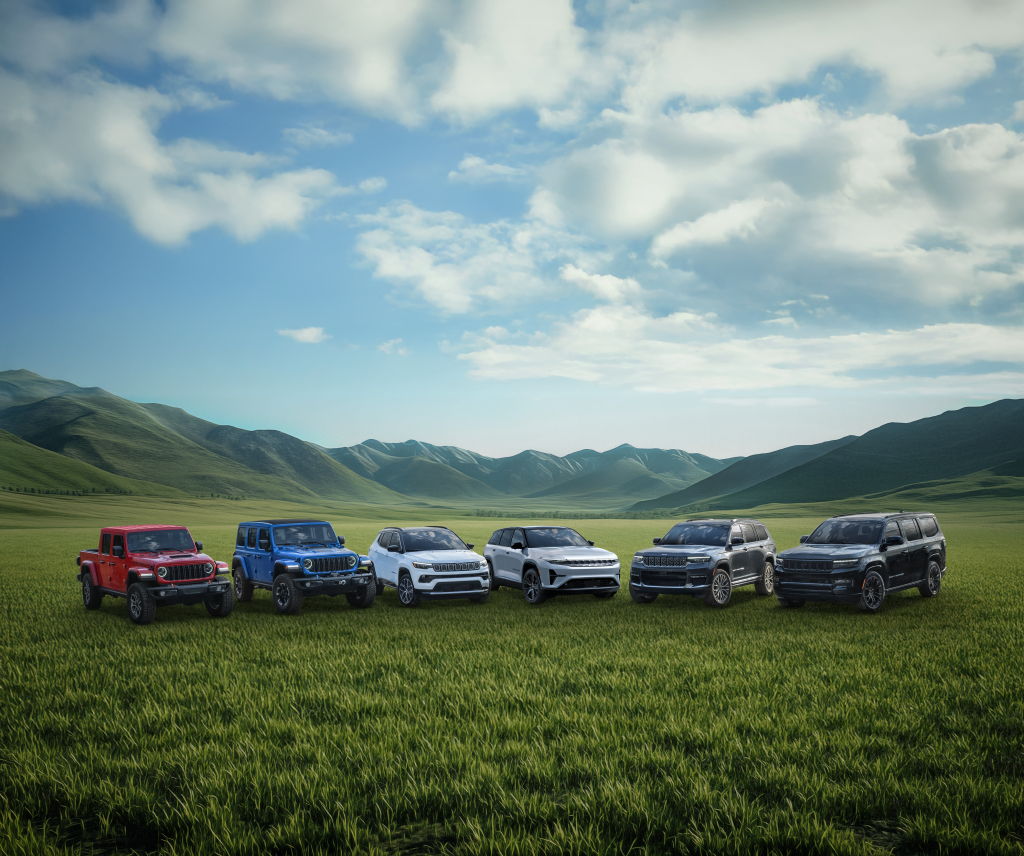
When it comes to rugged capability, adventurous spirit, and timeless design, few manufacturers enjoy the same reputation as Jeep. With off-road icons such as the Wrangler, to more refined family SUVs like the Grand Cherokee, Jeep has a stable that will appeal to a wide range of drivers. But when asked, "What is the best Jeep model? the reply depends on what kind of driver you are and what you need most out of your vehicle. So here, we will explore Jeep's most popular models, mention their advantages, and help you know which one actually deserves the title "the best" – for you. Jeep Wrangler – The Off-Road Legend If adventure matters most to you, the Jeep Wrangler is in itself the quintessential Jeep vehicle. Its lineage dates back to the very first World War II Willys Jeep, and it remains a beacon of freedom and exploration. The Wrangler is built for those who wish to drive where everyone else cannot. With available four-wheel-drive systems like Command-Trac and Rock-Trac, locking differentials, and low approach and departure angles, the Wrangler can drive through mud trails, boulders, and more. Removeable doors and tops give it an open-air ride that no other SUV can deliver. The Wrangler line has a range of trims, from the classic Sport to the luxury Sahara and the Rubicon, which is more off-road focused. There is even a 4xe plug-in hybrid variant that combines efficiency and capability in one vehicle, with up to 49 MPGe while still delivering the power Jeep fans expect. For flat-out adventure and off-road dominance, the Wrangler is the quintessential Jeep model — it is the essence and spirit of the brand. Jeep Grand Cherokee – The Perfect Balance For those seeking a combination of comfort, capability, and sophistication, the Jeep Grand Cherokee is the perfect all-around choice. It's the company's top SUV and offers the perfect balance of off-road capability and on-road refinement. The Grand Cherokee is available in a range of trims from the nicely equipped Laredo to the upscale Summit Reserve. It also boasts strong powertrain choices with its 3.6L V6, 5.7L HEMI® V8, and the plug-in hybrid 4xe model for those who want improved fuel efficiency. The Grand Cherokee's advanced 4x4 systems and available Quadra-Lift air suspension allow it to conquer difficult trails while offering a smooth, quiet highway ride. Inside, the Grand Cherokee is characterized by upscale materials, cutting-edge tech, and generous space for passengers and cargo. Families love the Grand Cherokee L, a three-row version with seating for up to seven passengers without sacrificing comfort or capability. For versatility and luxury, the Grand Cherokee is arguably the greatest Jeep model — suited for families, commuters, and weekend adventurers. Jeep Gladiator The Jeep Gladiator combines the Wrangler's legendary DNA with pickup truck utility to create one of the most versatile vehicles in the Jeep lineup. If you need a vehicle that can traverse off-road trails and also haul gear, the Gladiator may be the ideal Jeep model for your situation. The Gladiator takes a cue from the Wrangler's aggressive look and removable roof and doors, giving you that very same open-air vibe. It's powered by a 3.6L Pentastar® V6 with 285 horsepower and boasts a staggering 7,700-pound towing capacity when so equipped. The optional Rubicon trim adds some serious off-road equipment, making it one of the most off-road-worthy trucks ever made. With its rugged construction and truck bed capacity, the Gladiator is the perfect Jeep vehicle for motorists who have to combine outdoor exploring with everyday functionality. Jeep Compass – Compact Yet Capable For those who want something a little smaller but still want to have that authentic Jeep identity, the Jeep Compass fails not. It's a small SUV with more off-road capability than most of its competitors in its class, thanks to its available Trailhawk package and Jeep Active Drive Low 4x4 system. The Compass has also seen full overhauls in the recent past, with a more premium interior, updated technology like a huge Uconnect touchscreen, and sophisticated safety features. It's also fairly fuel-efficient, which makes it ideal for commuters who don't want to give up the spirit of adventure. If you’re looking for an affordable, easy-to-drive, and efficient SUV that still carries Jeep’s rugged DNA, the Compass is one of the best Jeep models for everyday life. Jeep Cherokee – A True Jeep Classic The Jeep Cherokee is a staple of the family for years, occupying the niche between the small Compass and the large Grand Cherokee. Acclaimed for its smooth ride and available off-road capability, the Cherokee provides drivers with an outstanding utilitarian but adventurous SUV. With trims like the Trailhawk, Cherokee offers Jeep's advanced 4x4 systems, skid plates, and ground clearance to make owners feel more secure off-road. Inside, it has a blend of space, technology, and comfort and is ideal for families or lifestyle-friendly people. The Cherokee has been one of the top Jeep models for decades to combine getting together performance and everyday practicality in one well-rounded vehicle. Jeep Wagoneer and Grand Wagoneer – The Height of Luxury Apex of Jeep's lineup are the Wagoneer and Grand Wagoneer, both full-size SUVs that establish the benchmark for what luxury means for Jeep. They provide unprecedented comfort, cutting-edge technology, and heavy-duty towing capacity — all without compromising Jeep's legendary 4x4 capability. The Wagoneer comes with an advanced cabin that's equipped with premium materials, available eight-seat capacity, and best-in-class towing capacity of 10,000 pounds. The Grand Wagoneer takes it another step up with even more luxury, such as a full set of digital screens, massaging seats, and one of the quietest in its class. If you want the most comfortable, most powerful, and most prestige-filled Jeep out there, the Grand Wagoneer is the best Jeep model — or if you're a big family and the person who wants first-class luxury without giving up the Jeep life. What's the Best Jeep Model Overall? The truth is that there's not one "best" Jeep model — it all comes down to your needs. For off-road enthusiasts: The Jeep Wrangler Rubicon is unbeatable. For households and daily convenience: The Grand Cherokee or Grand Cherokee L are best. For utility-oriented adventure enthusiasts: The Gladiator is the most functional. For subcompact SUV purchasers: The Compass offers value and real capability. For luxury buyers: The Grand Wagoneer is top of the list. Each model represents a different aspect of what makes Jeep special — freedom, durability, and the ability to go anywhere. Whether you’re climbing a mountain trail, towing a boat to the lake, or simply running errands around town, there’s a Jeep perfectly suited for your lifestyle. Final Thoughts So, what is the best Jeep model? The answer rests in what kind of driver you are. Adventure-seeking? Choose the Wrangler. Comfort, luxury, and family at the top of your priorities? Choose the Grand Cherokee or Grand Wagoneer. Something in the middle — rugged but functional? Then the Gladiator or Cherokee would be your ideal match. Jeep's lineup is stronger and more diverse than ever, so there's a great vehicle for every type of driver. Whatever you choose, you're not only getting a car — you're joining a tradition born of exploration, freedom, and the spirit of the open road. Ultimately, the perfect Jeep model is the one that's right for your adventure.